

Sneezing every morning, itchy eyes during a change of season, or a sudden rash after a meal are things many of us brush off as “nothing serious.” But when these problems keep coming back, your body may be reacting to something it considers harmful. Knowing the common allergy symptoms helps you identify the problem early, avoid your triggers and get the right treatment before things get worse.
Signs of Allergies: What Is Happening in Your Body?
An allergy happens when your immune system overreacts to a normally harmless substance, such as pollen, dust mites, pet dander, mould, certain foods, insect stings or medicines. To fight this “invader,” your body releases chemicals like histamine, and this is what causes most of the symptoms you feel. The signs of allergies can appear within minutes of exposure or take a few hours, and they can affect your nose, eyes, skin, lungs or stomach.
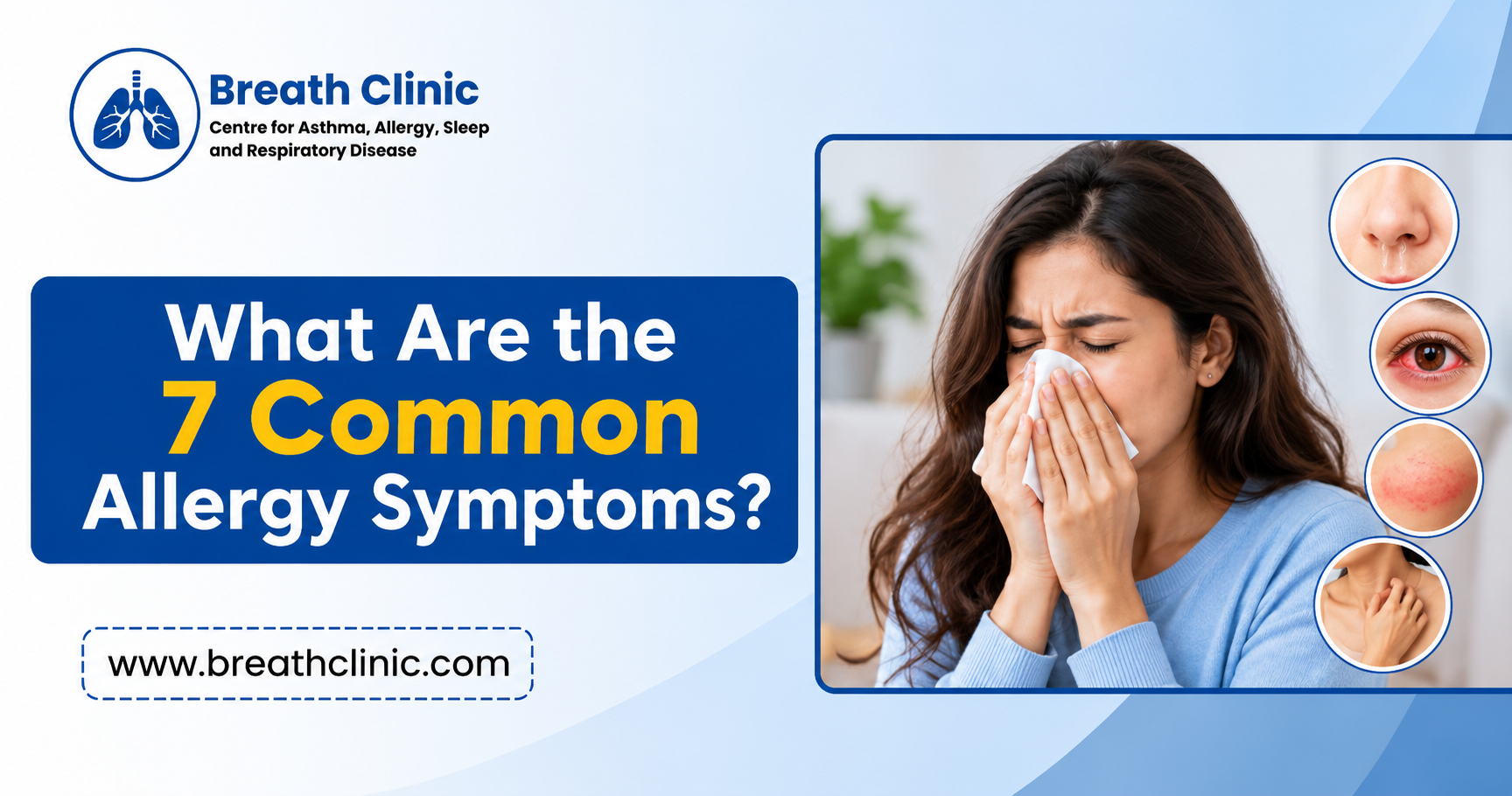
The 7 Common Allergy Symptoms
1. Sneezing
Repeated sneezing, especially in the morning or after being around dust or pollen, is one of the most typical signs. It often comes in long bursts.
2. Runny or Blocked Nose
Clear, watery discharge, a stuffy nose and constant sniffing are very common. Many people confuse this with a cold, but allergy symptoms usually last longer and do not come with fever. If you often wonder whether allergy can cause a cold, the answer is that allergic rhinitis can look exactly like one, which is why the difference matters.
3. Itchy, Red or Watery Eyes
Allergic reactions often irritate the eyes, making them itchy, red, swollen and teary. Rubbing them usually makes it worse.
4. Skin Rashes, Hives and Itching
Red patches, raised bumps (hives), dry or scaly skin and intense itching can appear after contact with an allergen or after eating a trigger food.
5. Cough, Wheezing or Shortness of Breath
When allergens reach the lungs, you may cough, wheeze or feel your chest tighten. This is more serious in people with asthma and should never be ignored.
6. Itchy Throat, Ears or Mouth
A scratchy throat, itching in the roof of the mouth or ears, and post-nasal drip causing a constant urge to clear the throat are also frequent complaints.
7. Swelling and Stomach Problems
Swelling of the lips, face or eyelids can occur with food or drug allergies. Some people also have nausea, vomiting, stomach cramps or diarrhoea, particularly with food allergies.
You can read a broader overview of the symptoms of allergy to understand how they differ based on the trigger.
Allergy Symptoms in Adults
Allergy symptoms in adults are not always the same as in children. Adults can develop allergies even if they never had one earlier, and the symptoms may show up after moving to a new city, changing jobs, or being exposed to new pollution levels. Adults are also more likely to have constant tiredness, headaches, a feeling of “brain fog,” and disturbed sleep because of a blocked nose. These less obvious signs are often missed, so a long-lasting problem should always be checked by a doctor.
Common Signs of Allergic Reactions That Need Emergency Care
Most allergies are mild, but some reactions can turn dangerous very quickly. This is called anaphylaxis, and the common signs of allergic reactions to watch for are difficulty breathing, swelling of the tongue or throat, a rapid heartbeat, dizziness, fainting, widespread hives or a feeling of doom. Go to the nearest hospital immediately if you or anyone around you has these symptoms.
Allergy Warning Signs You Should Not Ignore
Certain allergy warning signs tell you that it is time to see a specialist rather than self-medicate:
- Symptoms that last more than two weeks
- Frequent use of antihistamines or nasal sprays just to feel normal
- Night-time cough, wheezing or poor sleep
- Repeated sinus infections or ear problems
- Symptoms that affect work, school or daily activities
If you recognise these common allergy symptoms in yourself or your child more than occasionally, getting a proper diagnosis can save you months of discomfort.
What to Do If You Have an Allergy
The first step is to avoid the trigger as far as possible, such as keeping your home dust-free, using a mask outdoors and checking food labels. Saline nasal rinses and a clean bedding routine can also help. Your doctor may recommend antihistamines, nasal sprays or other medicines. Here is a practical guide on what to do if you have an allergy, including simple steps you can start at home.
When the trigger is unclear, an allergy test can identify it. Many patients ask about the allergy test cost in Jaipur before getting tested, and knowing the range in advance makes planning easier.
When to See an Allergy Doctor
Do not wait for symptoms to become severe. An experienced allergy doctor in Jaipur can examine you, find your triggers and create a treatment plan that fits your lifestyle. At Breath Clinic, patients with allergies, asthma and other breathing problems are treated under the guidance of Dr. Pankaj Gulati, who focuses on finding the root cause instead of only giving temporary relief.
Recognising the common allergy symptoms early is the best way to protect your health, so if something feels off, get it checked.
Frequently Asked Questions
1. What are the most common allergy symptoms?
Sneezing, a runny or blocked nose, itchy and watery eyes, skin rashes, cough or wheezing, an itchy throat, and swelling are the most common ones.
2. How can I tell the difference between an allergy and a cold?
A cold usually brings fever and body ache and goes away in a week or so. Allergies cause itching, clear nasal discharge and sneezing that can continue for weeks as long as you are exposed to the trigger.
3. Can adults suddenly develop allergies?
Yes. Allergies can start at any age, even if you never had any earlier. Changes in environment, hormones or immunity can play a role.
4. How long do allergy symptoms last?
They can last a few hours to several weeks, depending on the trigger and how long you are exposed to it. Seasonal allergies can return every year.
5. Can allergies cause fatigue and headaches?
Yes. A blocked nose, poor sleep and inflammation in the body can lead to tiredness, headache and difficulty concentrating.
6. Which allergy warning signs mean it is an emergency?
Trouble breathing, swelling of the face, lips or throat, dizziness, fainting and a fast heartbeat need immediate medical help.
7. Is it necessary to do an allergy test?
Not always, but it is helpful when symptoms are frequent, severe or the trigger is not clear. A doctor will tell you whether testing is needed.
8. Can allergies be cured?
Most allergies cannot be cured completely, but they can be controlled very well with trigger avoidance, medicines and, in some cases, immunotherapy as advised by your doctor.